

HVAC Repairing Course in India
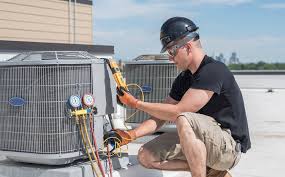
An HVAC Repairing Course in India is a complete technical training program designed to teach the fundamentals and advanced concepts of Heating, Ventilation, and Air Conditioning systems. This course covers essential components like compressors, condensers, evaporators, motors, ducts, blowers, fans, thermostats, and expansion valves. Students learn how cooling and heating cycles work, how refrigerant moves through the system, and how different HVAC parts interact to maintain indoor comfort. The course also includes the electrical side of HVAC units—wiring diagrams, relays, capacitors, contactors, PCB boards, and inverter technology. Modern HVAC courses add modules on smart HVAC systems, IoT-enabled thermostats, VRF/VRV systems, air quality management, and energy-efficiency techniques. By the end of the course, students gain expertise in diagnosing faults, repairing units, replacing parts, handling refrigerants safely, and maintaining HVAC systems for smooth operation.
HVAC Repair Training Online
HVAC Repair Training Online has become one of the smartest and most accessible ways to gain professional technical skills from home. With the rise of digital learning platforms, students can now learn HVAC repair using high-quality video lessons, virtual labs, 3D simulations, and instructor-led live sessions. Online training is especially helpful for people with busy schedules, working technicians looking to upgrade their skills, or students living far from training centers. In online HVAC training, learners explore core topics such as refrigeration cycles, electrical circuits, air distribution, thermostat operations, and safety procedures. Advanced platforms also offer interactive quizzes, downloadable notes, troubleshooting practice, and real-case repair videos. Online training has evolved to include virtual toolkits, system diagnostics practice, and step-by-step repair demonstrations—giving students an almost real workshop experience. As the HVAC industry keeps expanding, online repair training has become a powerful alternative to traditional classroom learning.
HVAC Repairing Course Near Me
Searching for an HVAC Repairing Course Near Me helps learners find the closest training centers with hands-on workshops. A nearby course is highly beneficial because HVAC repair demands practical experience. Students get to work with real tools, test different AC and HVAC models, and perform live troubleshooting under expert supervision. Local institutes often provide flexible batches, weekend classes, and affordable training fees. They also offer internships, job placements, and connections with local HVAC service companies. When choosing a center near you, it is important to check the quality of practical training, equipment variety, certification value, and placement support. A good nearby HVAC course not only teaches repair skills but also builds long-term professional confidence and ensures career growth in your local area.
HVAC Repairing Course Online
An HVAC Repairing Course Online combines the convenience of home learning with high-quality technical education. These courses provide detailed lessons through animations, virtual disassembly videos, troubleshooting guides, wiring diagrams, performance tests, and component-level breakdowns. Students learn how to identify faulty parts, measure voltage, check refrigerant pressure, and fix issues in both residential and commercial HVAC systems. Online courses also include assignments, live doubt-clearing sessions, downloadable manuals, and recorded expert workshops. Some platforms offer simulation labs where learners can virtually repair compressors, adjust thermostats, and detect refrigerant leaks. Online HVAC courses are highly cost-effective and allow students to repeat lessons as many times as needed—strengthening understanding and building real repair confidence.
HVAC Repairing Course In India
An HVAC Repairing Course in India is one of the most in-demand technical programs due to the rapid growth of the cooling and heating industry. With rising temperatures, increasing use of ACs, large commercial buildings, malls, hospitals, and industries, India needs a huge workforce of trained HVAC technicians. Indian institutes offer government-approved and Skill India–certified HVAC courses. These programs cover refrigeration basics, air conditioning systems, duct design, heat pumps, ventilation systems, and electrical controls. Students also receive training on modern technologies like VRF systems, inverter ACs, chiller plants, split and central AC systems, and energy-efficient cooling solutions. After completing HVAC training in India, technicians can find jobs nationally or in international markets like the Middle East, Europe, and Southeast Asia where HVAC skills are in high demand.
A to Z Technical Training Institute, Lucknow
HVAC Repairing Course Tools
HVAC & Railway Air-Conditioning Training Program
(थ्योरी • प्रैक्टिकल • टूल्स • सेफ़्टी • Gulf स्टैंडर्ड्स)
HVAC & Railway Air-conditioning
Step-by-step dismantling और deep cleaning
Electrical & mechanical checking (compressor, capacitor, fan motor, PCB)
Indoor/Outdoor inspection & preventive maintenance
Multimeter, gauge, clamp meter का सही इस्तेमाल
Safety: PPE, gloves, proper tools, awareness & precautions
✔ कॉपर ब्रेज़िंग और पाइपिंग वर्क
Silver rod से मज़बूत, leak-proof joints
Nitrogen purging, heat control और fire safety
✔ डीप वैक्यूमिंग प्रोसेस
500 micron deep vacuum with micron gauge
Moisture removal और vacuum hold test
✔ गैस चार्जिंग (Advanced Level)
Superheat / Sub-Cooling आसान तरीक़े से
PT Chart, scale, manifold gauge का सही इस्तेमाल
Over/Under charging के नुक़सान और सेफ़्टी गाइडलाइन्स
✔ Railway Air-Conditioning Module
Coach AC system (Roof-mounted & Under-slung units)
Controls, alternator, compressor, VCB, RMPU operation
Safety rules और troubleshooting techniques
✔ Gulf Country Special Training
International safety standards (LOTO, PPE)
High-rise, malls, metro systems पर काम करने का तजुर्बा
Technical interview preparation & guidance
A to Z Technical Training Institute, Lucknow
Comprehensive HVAC & Railway Air-Conditioning Program
(Theory • Practical • Tools • Safety • Gulf Standards)
HVAC & Railway Air-conditioning
Step-by-step dismantling, deep cleaning & performance testing
Electrical & mechanical diagnostics (compressor, PCB, capacitor)
Tool handling: multimeter, clamp meter, gauges & PPE safety
✔ Copper Brazing & Piping
Leak-proof silver brazing with nitrogen purging
Controlled heating & fire safety compliance
✔ Deep Vacuuming & System Preparation
500-micron vacuum, moisture removal & hold test
✔ Advanced Refrigerant Charging
Superheat/Subcool method • PT chart-based charging
Digital tools • Over/undercharge prevention • Safety handling
✔ Railway AC Module
Roof-top & under-slung systems
Controls, alternators, compressors, RMPU & safety standards
✔ Gulf-Ready Technical Skills
International safety • Modern tools • Site-oriented training
Job interview & technical assessment support.
HVAC Repairing Course Syllabus Contents
INTRODUCTION TO HVAC & REFRIGERATION
Heating/ventilating & Air conditioning
Fundamentals & basics of HVAC
Window AC, Split AC, Centralized AC
ASHRAE guidelines & its standards
HVAC Functioning
Basic Refrigeration Cycle
Vapour Compression System
Vapour Absorption System
Basic Air Conditioning Components
Compressor & Types of Compressor
Condenser & Types f Condenser
Evaporator & Types Of Evaporator
Centralized Air Conditioning & its Parts
Water cooled chillers
Air cooled chillers
Cooling towers
AHUs
Pumps
Humidifiers/ Dehumidifiers
Air Washers
Expansion
HVAC Control
Functions
AC Drives
DOL Starter
Star Delta Starter
Variable Frequency Drives (VFDs)
Sensor / Actuators / Thermo state
Thermocouple
HVAC Control with BMS
Indoor Air Quality
Factor Affecting the air quality
Controlling for air pollutants
Ventilation
Study on Psychometric Chart
Psychometric Properties
Dry bulb temperature
Wet bulb temperature
Relative humidity
Dew Point temperature
Specific humidity
Absolute humidity
Specific Enthalpy
Pressure
Building Heat & Cooling Load Calculation
Calculation for Heat Loss / Heat Gain
Sensible Heat Load
Latent Heat Load
HVAC Design Calculation
Water Distribution System
Calculation for chilled water & condenser water pipeline
Air Distribution System
Calculation for duct size
Soft ware’s using in HVAC Designing
Cooling & Heating load calculation using software
Calculation & duct size using software’s
Calculation of pipe size (chilled water & Condenser water) using software’s
Introduction to Auto CAD
Starting AutoCAD
Drawing Area
Command Window
Status Bar
Starting New Drawing
Dynamic Input Mode
Creating And Managing
Workspace
Coordinate Systems
Drawing Lines & Circles
Erasing Object
Canceling & Undoing A Command
Inputting Data
Creating Basic Objects
Using Object Snaps
Using Polar Tracking And Polar Snap
Using Object Snap Tracking
Working With Units
Trimming And Extending
Objects To Defined Boundaries
Creating Parallel And Offset Geometry
Joining Objects
Breaking An Object Into Two Objects
Application of HVAC & Refrigeration
Hospitals
Commercial
Residential
Malls
Food Preservation
Cold Storage
HVAC Technician Course Details
HVAC Technician Course Details include a comprehensive syllabus that builds step-by-step technical mastery. The course begins with fundamentals of temperature, pressure, heat transfer, and refrigeration principles. Students learn about every major HVAC component:
Compressor: types, functions, troubleshooting
Condenser: heat removal, cleaning, coil repair
Evaporator: cooling process, airflow issues, frost removal
Expansion valve: refrigerant flow control
Motors and blowers: wiring, capacitor testing, replacements
Thermostats & sensors: calibration, fault detection
Refrigerants: types, safe handling, charging & recovery
Electrical controls: relays, contactors, PCB boards
Advanced modules include VRF/VRV systems, cooling towers, rooftop units, chiller plants, and HVAC load calculations. Students also learn practical tasks like brazing, vacuuming, pressure testing, leak detection, and system balancing. After completing the course, technicians become fully capable of installation, servicing, and maintenance of both small and large HVAC systems.
HVAC Maintenance Course
An HVAC Maintenance Course focuses on preventive servicing and long-term performance management of HVAC systems. Instead of major repair tasks, this course teaches how to maintain HVAC units to avoid breakdowns and ensure energy efficiency. Students learn essential activities such as cleaning air filters, inspecting ducts, tightening electrical connections, calibrating thermostats, lubricating motors, checking refrigerant levels, and measuring airflow. Maintenance technicians are trained to identify early signs of damage—such as abnormal noises, overheating, weak cooling, or compressor overload. A well-maintained HVAC system lasts longer, consumes less electricity, and offers healthier indoor air. For technicians already working in electrical or mechanical fields, this course is an excellent skill upgrade and helps increase service income.
HVAC Course Duration
HVAC Course Duration varies according to the depth of training offered. Short-term HVAC certificate courses take 1 to 3 months and cover basic air conditioning repair. Diploma-level HVAC courses last 6 to 12 months, providing advanced knowledge of heating systems, ventilation design, ducting work, electrical diagnostics, and commercial HVAC units. Some institutes offer multi-level courses where students progress from beginner to expert level. Online HVAC courses often follow a self-paced structure, allowing students to complete the course within weeks or extend it based on their availability. The right duration depends on whether the student aims for quick job-ready skills or comprehensive technical mastery.
HVAC Course Online
An HVAC Course Online is one of the most modern learning methods available for aspiring technicians. These courses bundle theoretical knowledge, case studies, animations, practical demonstration videos, and virtual repair tools in one platform. Students can learn anytime, pause lessons, repeat modules, and study at their own comfort. Many online HVAC courses offer recognized certification, improving job opportunities in service centers, industries, and commercial maintenance companies. Online learning also helps students prepare for interviews, build strong conceptual understanding, and gain confidence before entering real-world repair jobs. For beginners or working professionals, an online HVAC course provides a flexible, affordable, and effective path to becoming a skilled HVAC technician.